Loading Events

« All Events

  • This event has passed.

EASE course: Editorial School for Journal Editors

Module 3 – Peer review processes

Wednesday, 2 April 2025, 2.00pm-4.30pm (UK time)

Part I of our popular Editorial School for Journal Editors took place in March/April 2025. Serge Horbach presented the third of the four modules.

The format is a lecture, followed by a moderated breakout session in which small groups consider two case studies, and then a final session to feedback the discussions from the breakout groups and answer further questions from delegates.

Each module is recorded and made available to participants together with handbooks for easy reference.

Module 3 content

The peer review process is often considered to be the gold standard for journals, and yet the operation of peer review remains one of the main headaches for many journal editors and their publishers.

Peer review is frequently inefficient, time-consuming and can fail to pick up article shortcomings. Whilst not promising to resolve a global problem, this workshop looks at the various reviewing systems being used by different journals and provides tips for how the main problems with peer review (timeliness, quality and efficiency) can be reduced.

The workshop provides editors with the tools to make better decisions regarding the operation of peer review in their own journal, and to reduce the burden whilst also improving the quality of feedback for authors.

Learning objectives

  1. Different peer review workflows
    Delegates are introduced to the different systems for peer review so they can make informed selection of the correct workflow for their journals.
  2. Improving peer review
    Delegates learn how to avoid peer review problems and improve the quality of reviews that they receive.


If you would like to be notified when modules 1-4 are running again, please add your details to the waiting list.


Trainer

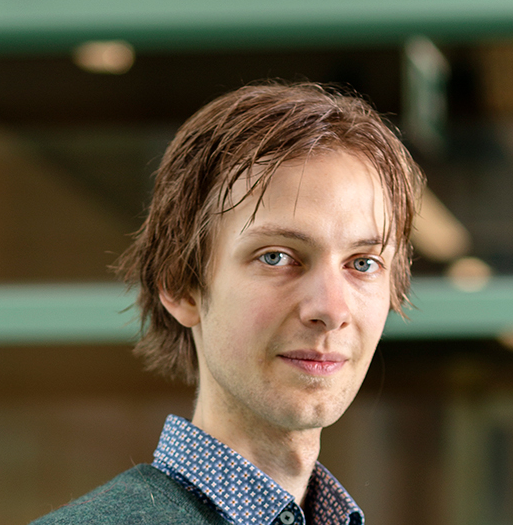
Serge Horbach

Assistant Professor, Radboud UniversityThe Netherlands

Dr. Serge P.J.M. Horbach is an assistant professor at Institute for Science in Society, Radboud University, the Netherlands. Being trained as a mathematician, he currently works in STS and Sociology of Science. His main research interests include scholarly communication and science-society interactions. His latest work is on open science, particularly open peer review, and on public trust in science. He also has a particular interest in the impact of automated tools, including generative AI, on science and scholarly communication.