
EASE Awards 2024 event
The winners of our EASE Awards 2024 were announced at the annual Awards Event on 12 February 2025. We took this opportunity to celebrate with those members who have gained major milestones in their EASE journey.
The winners of our EASE Awards 2024 were announced at the annual Awards Event on 12 February 2025. We took this opportunity to celebrate with those members who have gained major milestones in their EASE journey.

FAIR data - everyone has heard the term, but what does it actually mean? Karoline Mauer and Anandhi Iyappan, the metadata experts from The German Human Genome-Phenome Archive (GHGA), guided us through how to ensure FAIR data practices. The recording of this webinar will be available soon.

Charoula Tzanakou, EASE EDI Committee member, delivered this webinar on how to maximise excellence, creativity, economic opportunities, and societal relevance by fully integrating the gender dimension in research and innovation.
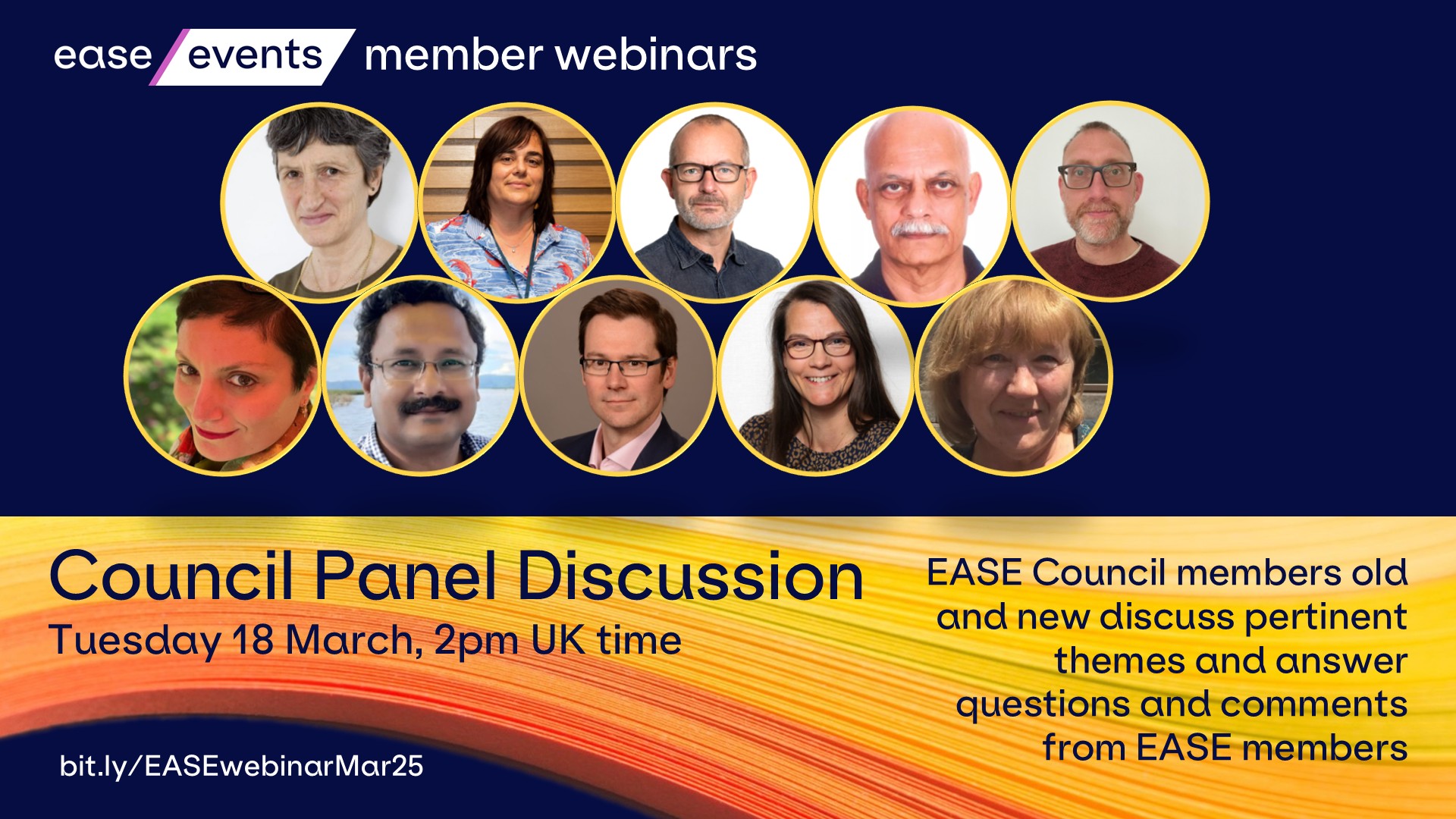
This panel discussion provided an excellent opportunity for members to hear from EASE’s leadership and to understand their thoughts about the coming years.

Part I of our popular Editorial School for Journal Editors took place in March-April 2025. Duncan Nicholas presented the first of the four modules. This session looks at what editors are expected to do, how to ensure that the right people are appointed and that there are systems to both support and encourage them so that they remain motivated members of the journal team.
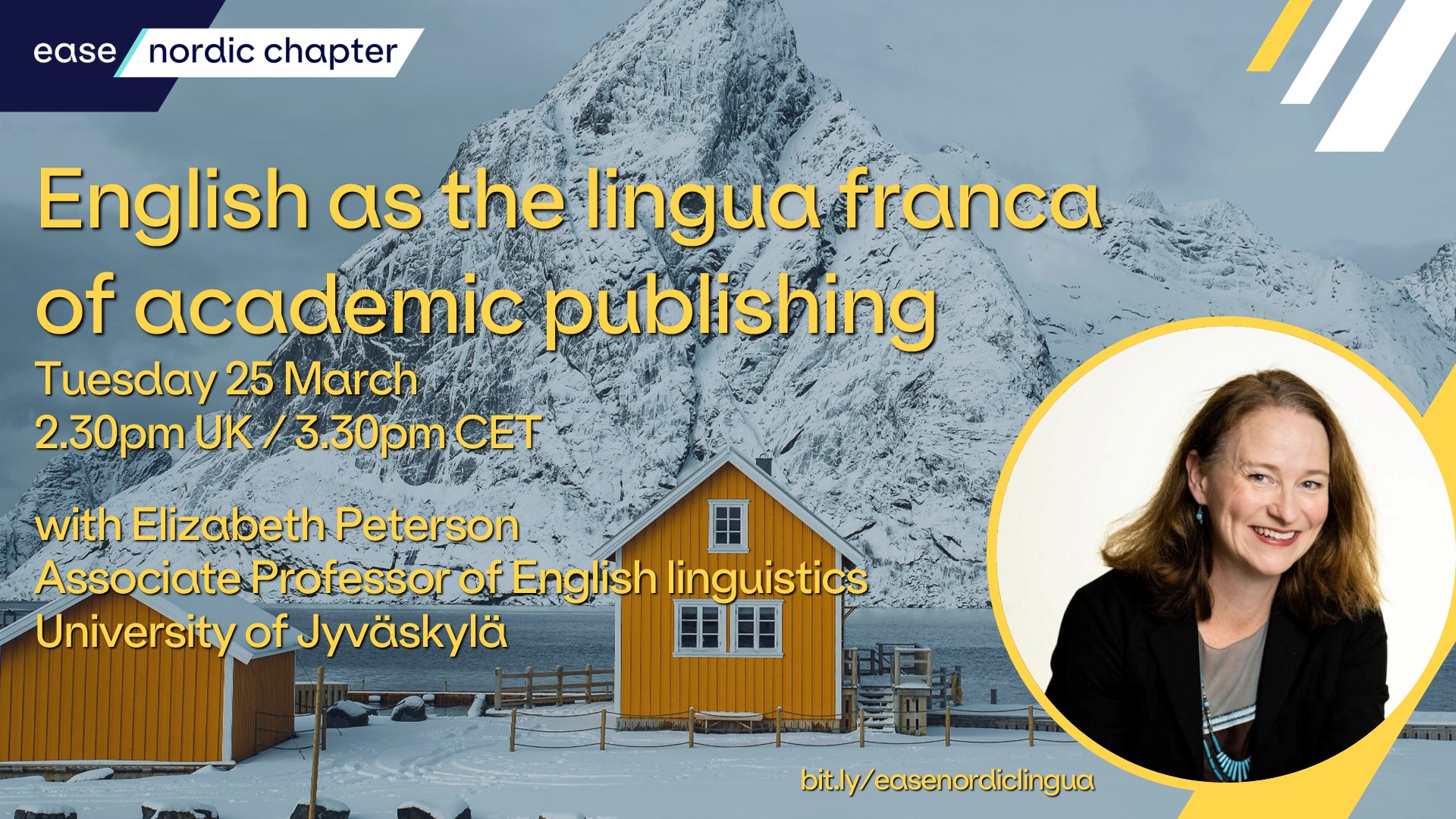
Elizabeth Peterson presented this session for the first Nordic Chapter webinar of 2025, focusing on the relationship between English and Nordic languages in academic publishing.
Part I of our popular Editorial School for Journal Editors took place March-April 2025. Joan Marsh presented the second of the four modules. The workshop highlights some of the most common ethical issues such as duplicate and plagiarised publications, author, editor and reviewer ethics, data and artwork manipulation and misinterpretation, ways in which problems can be mitigated, and how they (if they happen) can be resolved effectively and efficiently.

Whether your goal is to increase readers, submissions, or citations for your journal, discoverability is a high priority. ScienceOpen provides services to editors and publishers embedded in a freely accessible, interactive discovery environment of nearly 100 million article records. View the recording of this free webinar in which Stephanie Dawson, CEO of ScienceOpen, showed how EASE is using ScienceOpen to promote its journal European Science Editing and publish posters for its upcoming 18th EASE conference.

Part I of our popular Editorial School for Journal Editors took place in March-April 2025. Serge Horbach presented the third of the four modules. The workshop provides editors with the tools to make better decisions regarding the operation of peer review in their own journal, and to reduce the burden whilst also improving the quality of feedback for authors.

Part I of our popular Editorial School for Journal Editors took place March-April 2025. Are Brean presented the final module. This module looks at how editors and publishers can raise the impact of their journals and ensure their publications reach the intended audience.