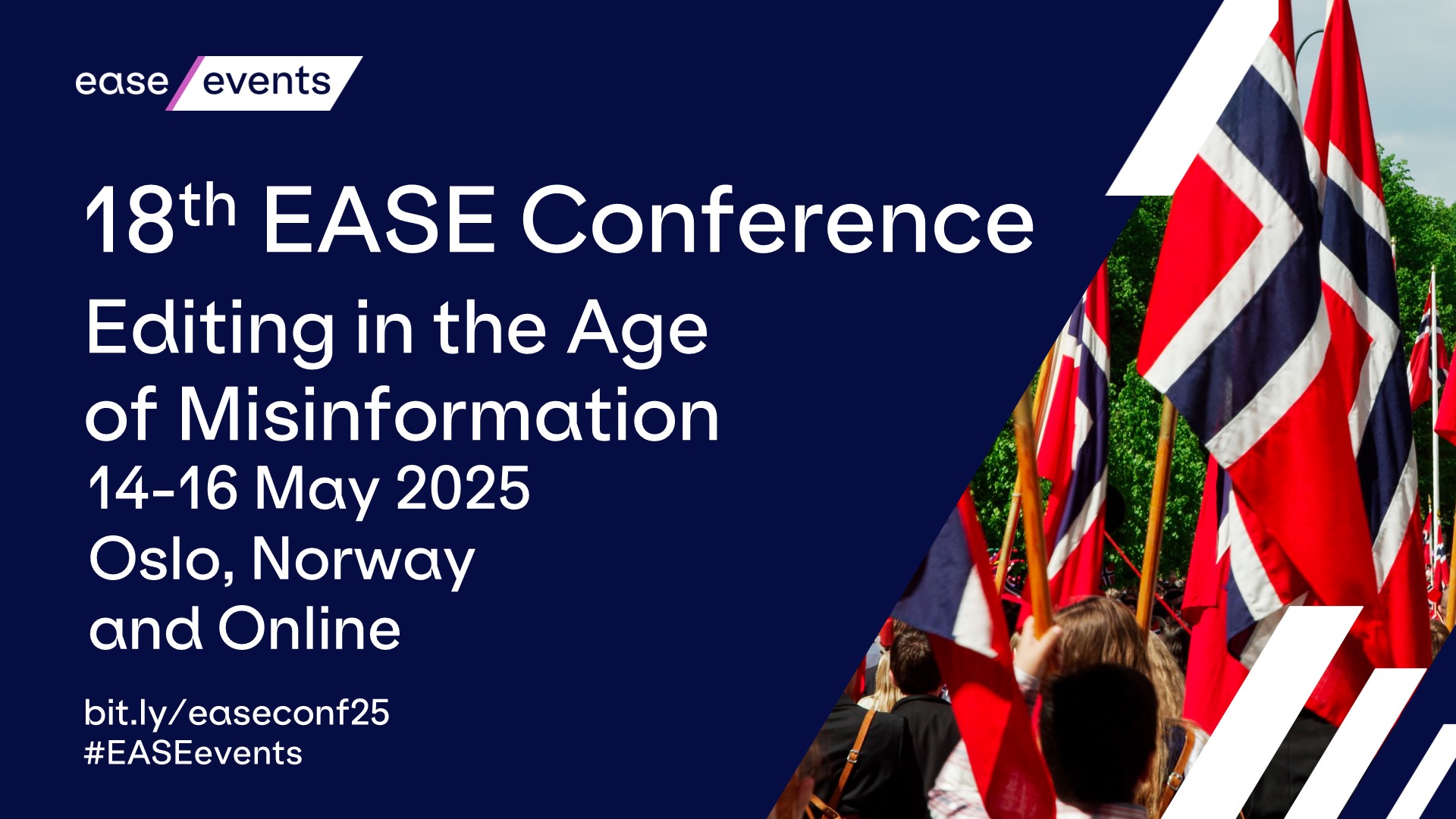
18th EASE General Assembly and Conference
We are now in Oslo, Norway for the 18th EASE General Assembly and Conference which is being held in Hybrid format. Registration is now closed.
We are now in Oslo, Norway for the 18th EASE General Assembly and Conference which is being held in Hybrid format. Registration is now closed.
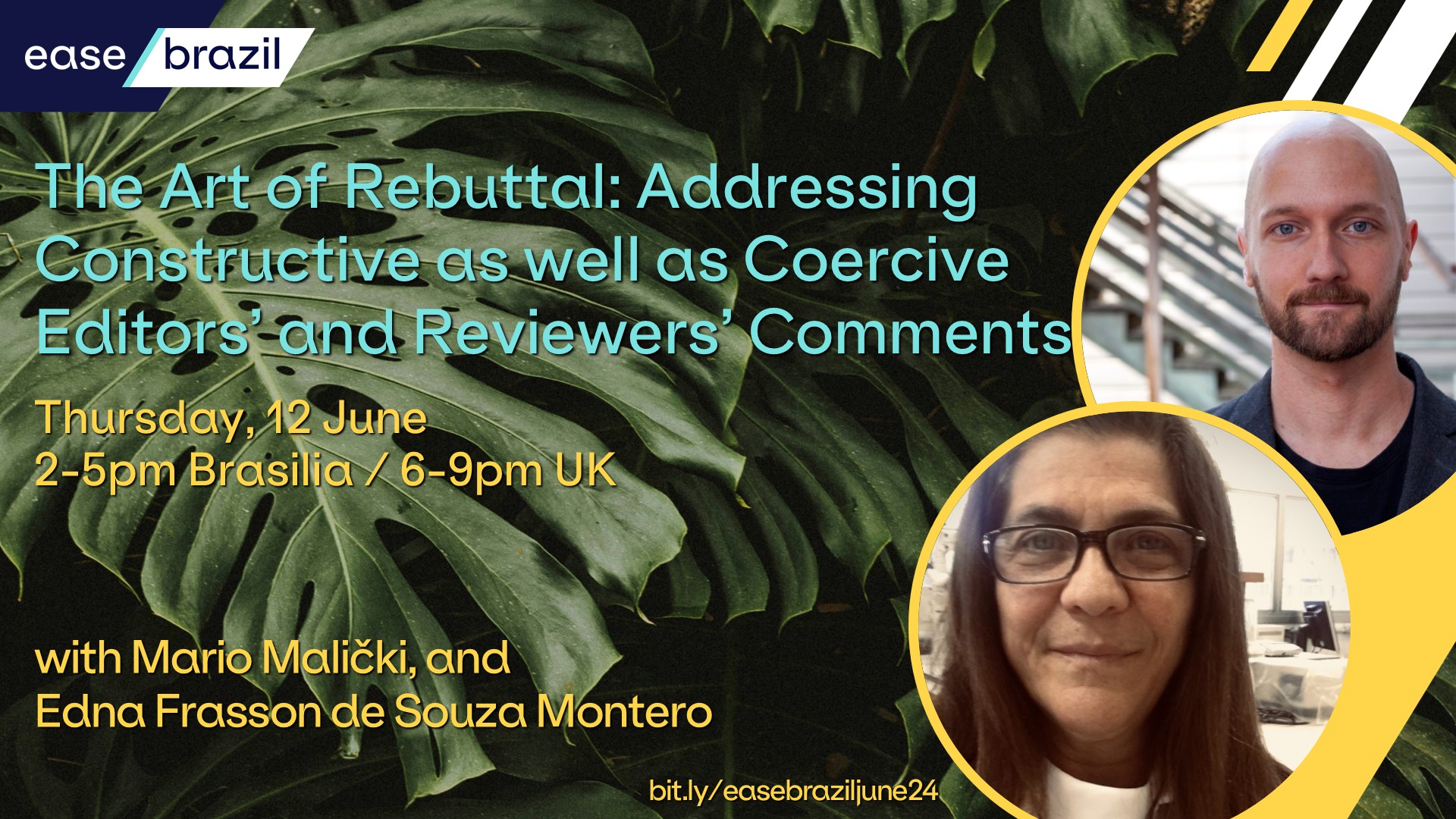
Today, scholarly publishing in peer reviewed journals commonly involves at least one round of rebuttal to feedback received by editors or reviewers. However, some of that feedback can also be offensive, coercive, and scientifically incorrect. In this talk, we will cover recent research on peer review, best practices in responding to received feedback, and means to raise concerns and address issues regarding questionable peer review practices. The event will be held in English with simultaneous translation into Portuguese.
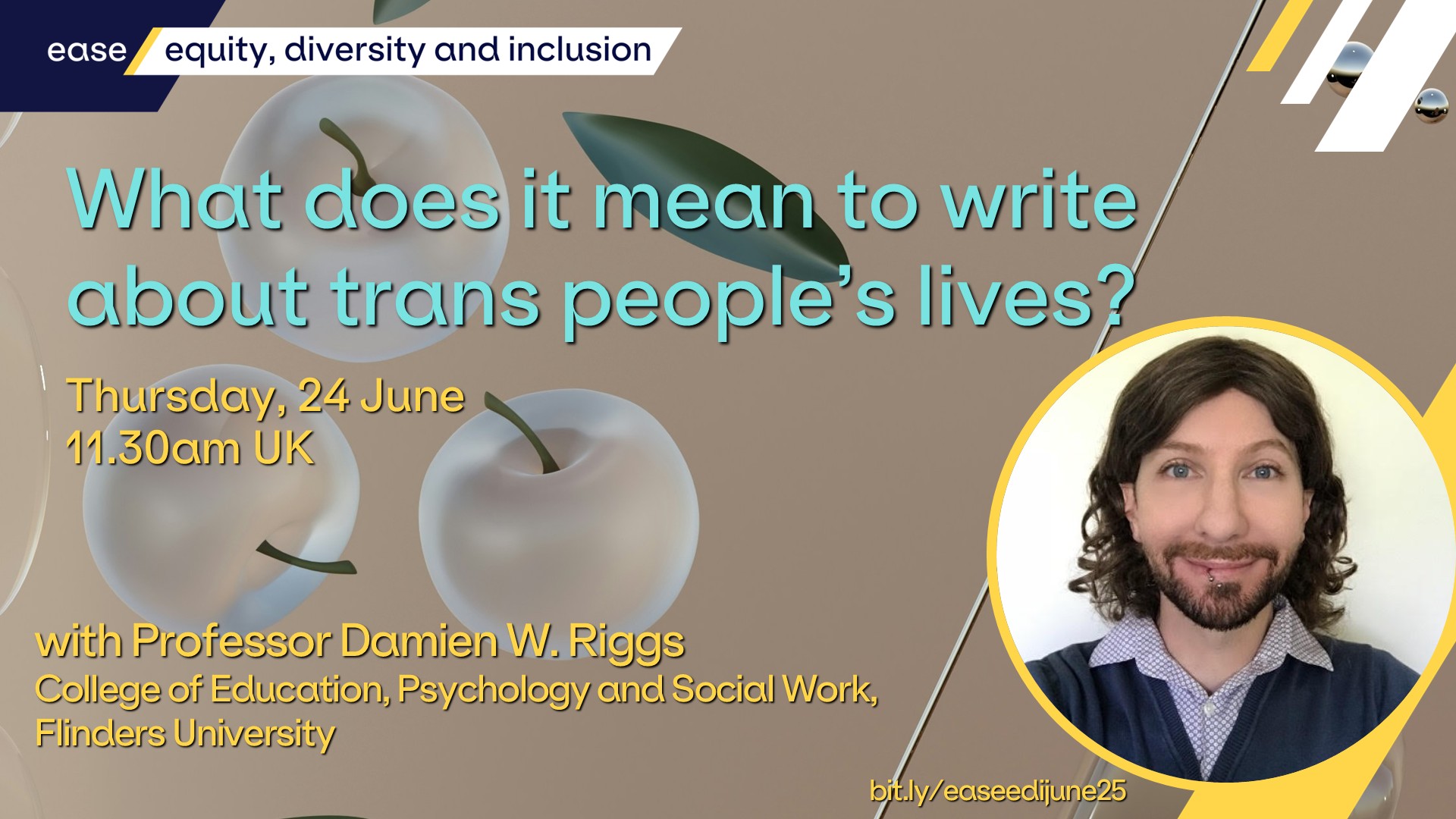
This presentation asks us to think about what it means to work and write in the field of trans studies, with a focus on cisgender people. What does it mean to create meaningful collaborations with trans people. What forms of relationships with communities are essential to formulating research questions and undertaking ethical research? Brought to you by the EASE Equity, Diversity and Inclusion Committee.

In this session, we dive into how editorial offices function and contribute at various stages of the publication process. We bring our experiences as career copyeditors working in small journal editorial offices, discussing the skills required in the running of an editorial office.

In this webinar Dr Evgeny Bobrov will introduce data sharing practices and policies common among academic journals, provide practical recommendations and best practices for editors to support data availability at their journals, and keep time for answering audience questions.

How does peer review evolve across cultures and technologies? As academic publishing becomes increasingly multilingual and AI-influenced, EASE chapters are localizing the Peer Review Toolkit to reflect diverse regional realities. These translations go beyond language, fostering ethical, inclusive, and context-aware review practices that empower editors and reviewers worldwide.
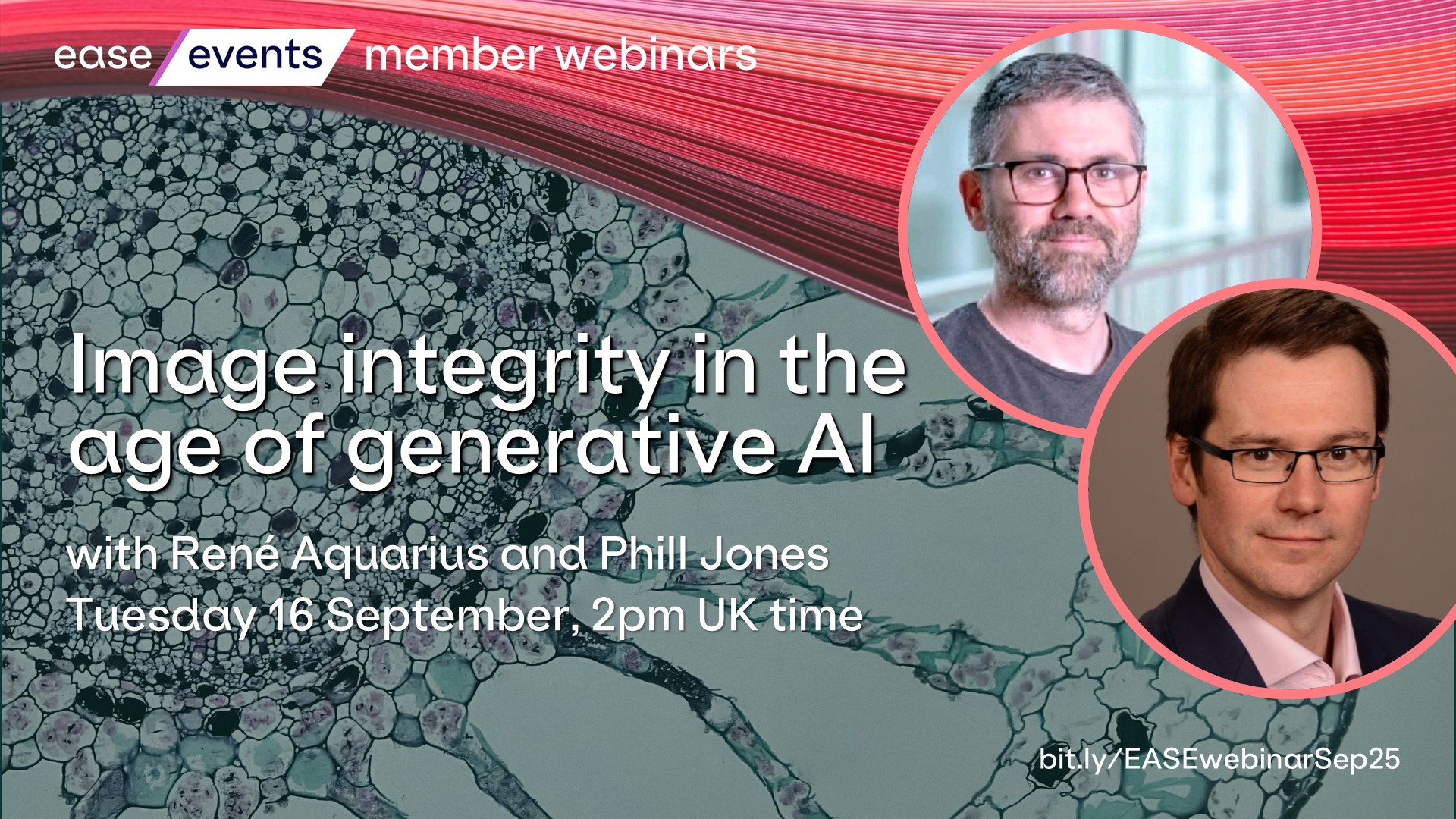
In this webinar, attendees will learn about the importance of image integrity to safeguarding the scholarly record. There will be an overview of some of the many approaches and techniques that currently exist to push back against fake research in general and manipulated and falsified images specifically and a look to the future to explore some of the technologies that are being developed -or already exist in other domains- that may well become future image integrity requirements for publishers and editors.
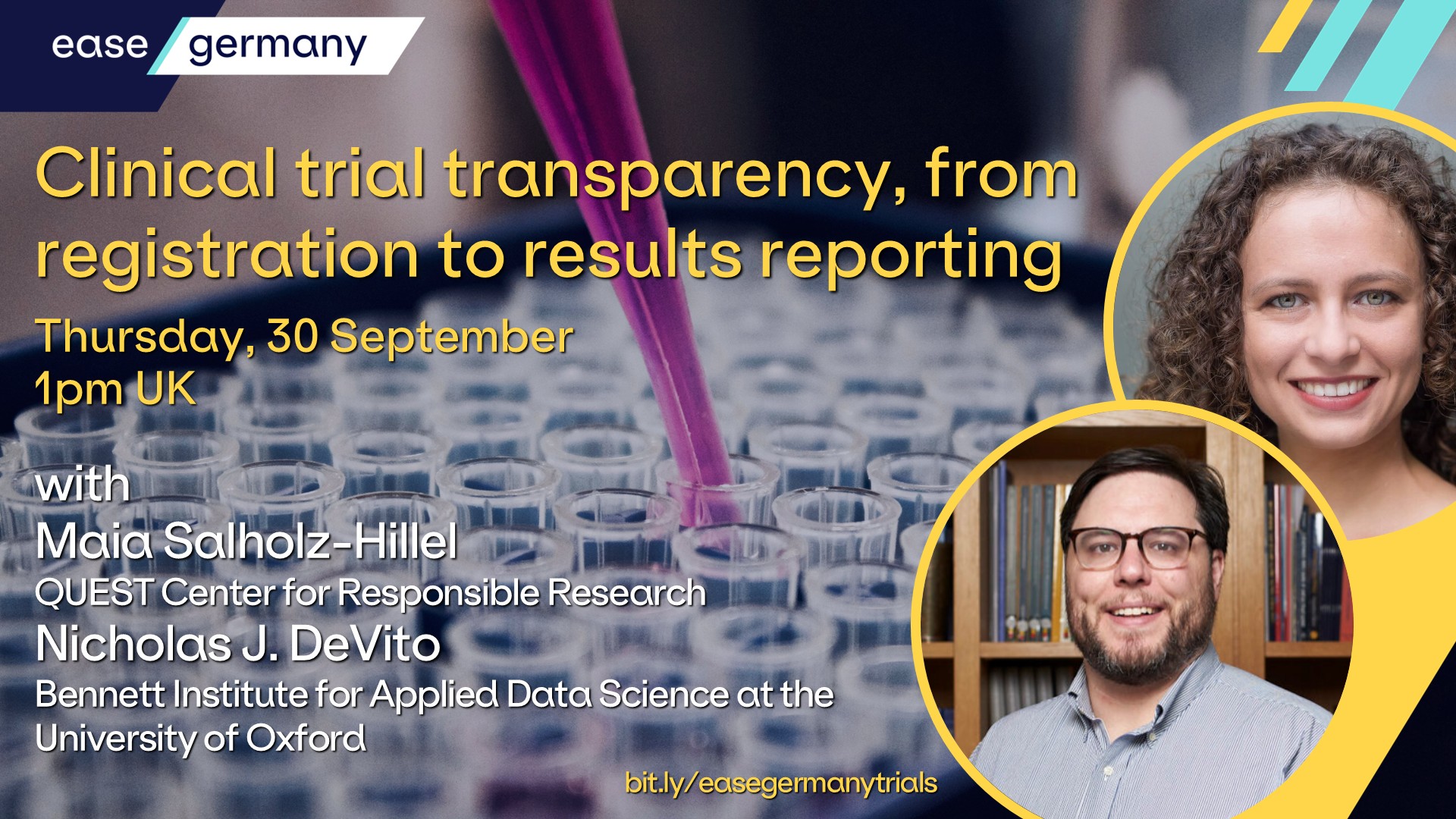
This webinar will provide an overview of practices key to trial transparency, such as registration, results reporting, and data sharing. We will discuss current standards and regulations and provide a brief history.

Part II of our popular Editorial School for Journal Editors will take place in October 2025. Iva Grabarić Andonovski will present the first of the four modules. This module considers how decisions are made, implicit and explicit bias, how decisions are communicated to authors and the wider public, and how decisive skills can be improved.
